







Search Results for: specialty coffee-producing region
Introduction to the Flavor, Taste, Grade, and Quality Characteristics of Coffee Beans from Ethiopia's Limu Region
Coffee bugs, in the previous few issues we learned about the origin and spread of coffee, so where does the coffee we drink today come from? Next, follow Little One to explore coffee-producing regions around the world~ Currently there are 53 major coffee-producing regions globally, all distributed within the Coffee Belt 『25°N~30°S』. Based on the spread timeline of specialty coffee and the flavors of the origins, we can roughly group these regions into three major categories: Old World old-fashioned flavor category, New World improved flavor category, and Oceanic island flavor category. In this issue, Gain Knowledge will first present the Old World coffee introduction~ Countries that already had Arabica varieties before the 17th century are called the "Old World," led by Ethiopia (Ethopia), with Yemen (Yemen) and India (India) as followers. These three ancient coffee countries retain the most diverse Arabica bean gene pool and traditional natural processing method. Their coffee flavor spectrum is broad and complex, with the greatest amplitude: from rough earthy, woody, leathery, medicinal, and fermented tofu off-flavors, to charming jasmine, cinnamon, cardamom, clove, pine and fir, mint, lemon, citrus, berry, apricot, smoked plum, chocolate... thousands of aromas and flavors, both good and bad, constructing an old-fashioned flavor spectrum that makes people love and hate it at the same time. Ethiopia has the world's most diverse coffee cultivation system and a complex ancient superior gene pool, plus diverse processing methods including natural, washed, and semi-washed, presenting complex and changeable flavors. It can be said that the "flavor spectra" of coffee-producing regions around the world can mostly be tasted here, reflecting Ethiopia's all-embracing "king's flavor." The push of the third wave of specialty coffee [more…]
A Comprehensive Analysis of Africa's Four Major Coffee-Producing Countries: Varieties and Flavors of Ethiopia, Kenya, Rwanda, and Burundi
Africa, as the continent of coffee's origin, has given rise to many world-renowned specialty coffee-producing countries. This article focuses on the four most representative African coffee-producing countries—Ethiopia, Kenya, Rwanda, and Burundi—and systematically reviews their geographical environments, variety characteristics, processing methods, and flavor profiles. Ethiopia's nine major producing regions each have their own distinctive features, from the jasmine aroma of Yirgacheffe to the mocha charm of Hara. Kenya is known for its SL varieties and bright acidity. Rwanda has achieved upgrading of its coffee industry under the promotion of the PEARL program. Burundi has emerged with its Cup of Excellence. Front Street Coffee provided professional information support for this article, hoping to help coffee enthusiasts gain a deeper understanding of the diversity of African coffee. [more…]
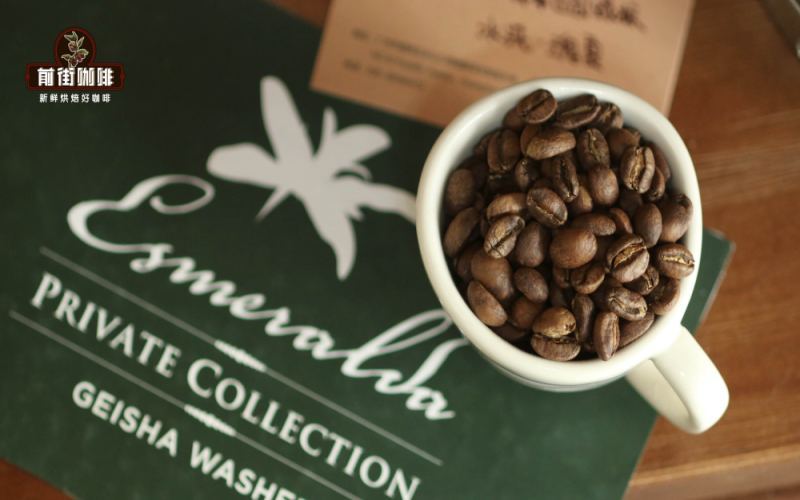
From Colombia to Brazil: How American Coffee-Producing Countries Rose to the World's Top Ranks Through Varieties and Terroir
The Americas are home to the world's most influential coffee-producing countries. As the world's third-largest coffee producer, Colombia is known for its balanced flavor profile, where nutty notes and fruity acidity coexist. Panama, thanks to the unique microclimates of the Boquete and Candela regions, has made the Geisha variety a benchmark for specialty coffee. Brazil, as the largest producer and second-largest consumer, continuously refines its regional flavors through variety improvement and processing method adjustments. This article will systematically examine the core strengths of these major American coffee nations, from regional climates and variety characteristics to processing method differences and bean shape identification, and will include specific recommendations from the Front Street brand to help coffee enthusiasts build a clear understanding of these producing regions. [more…]
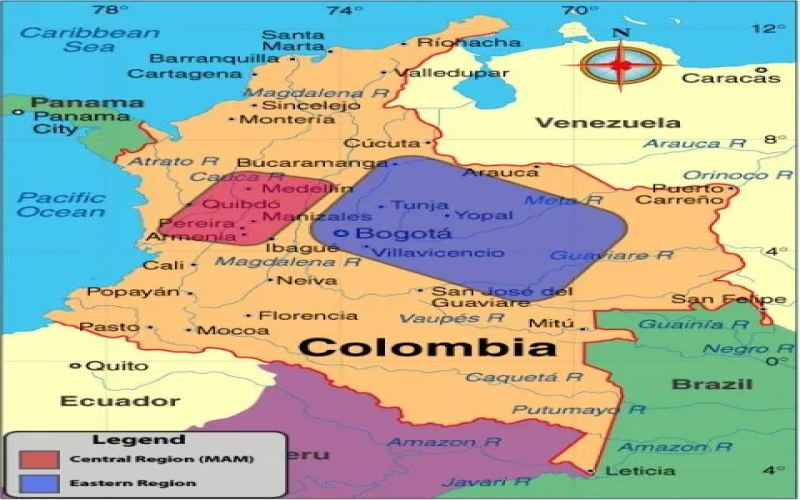
Central American Coffee Beans | Which regions in Colombia produce specialty coffee? What does the MAM designation mean? What are the flavor characteristics of washed beans from the Huila region?
Colombia is the world's second-largest producer of Arabica coffee beans after Brazil. Everyone is well acquainted with the chocolate-like flavor characteristic of Colombian coffee beans. Everyone also knows that coffee originated in Ethiopia—so if no one had brought coffee seeds or coffee saplings to Colombia, how could this [more…]

An Overview of African Coffee-Producing Countries: Flavor and Origin Analysis of Specialty Beans from Five Countries Including Ethiopia and Kenya
Africa lies around the equator and is globally recognized as the cradle of premium coffee. It is home to Ethiopia, the birthplace of coffee, as well as Kenya, known for its intense acidity, and Tanzania, Rwanda, and Burundi, each with its own distinctive production regions. Front Street Coffee has selected a range of African beans, from the floral and citrus notes of Yirgacheffe to the cherry tomato character of Kenya, and the delicate smoothness of Rwanda—every country presents a completely different terroir personality. This article systematically outlines the geographical environment, cultivation methods, main production regions, and signature bean flavors of five African coffee-producing countries, helping coffee enthusiasts build a clear framework for understanding African coffee. [more…]
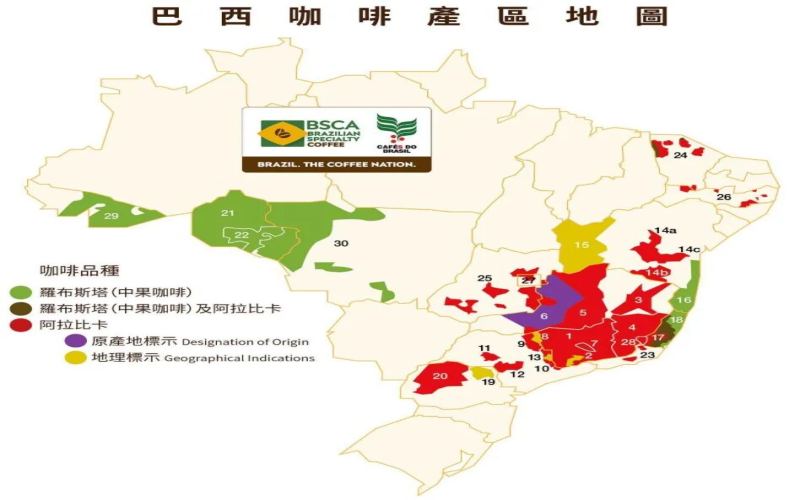
Main Coffee-Producing Regions in Brazil | What Are the Green Coffee Bean Grading Standards in Brazil? How Do You Describe the Flavor of Brazilian Coffee Beans?
What are the characteristics of Brazilian coffee, given that Brazil is the world's largest coffee-producing country? As a South American coffee, Brazilian beans have a relatively balanced flavor, low acidity, and a smooth mouthfeel, making them very suitable for use in espresso blends. Therefore, Front Street Coffee's basic blend, specialty blend, and commercial blend all use Brazilian beans as their base beans. Brazilian coffee [more…]
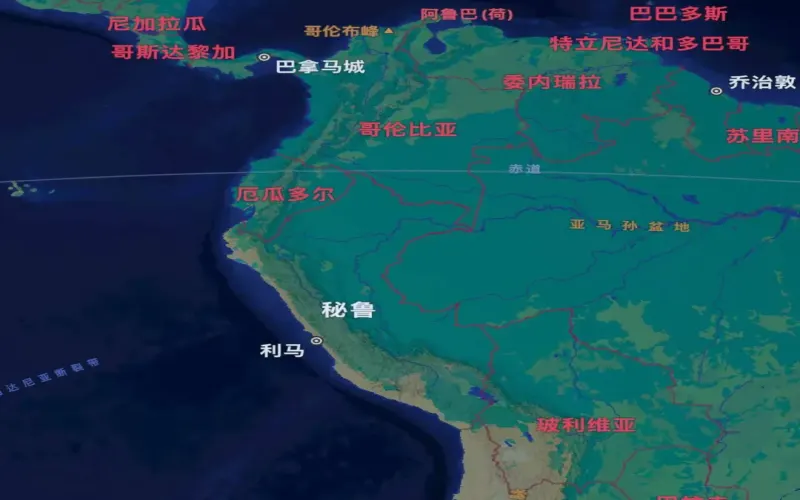
The Terroir Conditions and Flavor Characteristics of Peruvian Coffee Regions: Specialty Coffee on the South American Highlands
In South America, the exceptional soil and growing environment have nurtured numerous coffee-producing countries. Colombia, Ecuador, Brazil, and others are renowned worldwide, while Peru, though low-key, also produces high-quality coffee beans thanks to its excellent mountains, rivers, and soil conditions. This article will guide you through Peru's geographical and climatic features and analyze one by one the cultivation overview and flavor profiles of its three major coffee regions—north, central, and south—so you can experience this South American country's unique charm in the coffee world. [more…]
Flavor Analysis of Major Coffee-Producing Countries in the Americas: Coffee Characteristics of Brazil, Colombia, Costa Rica, and Panama
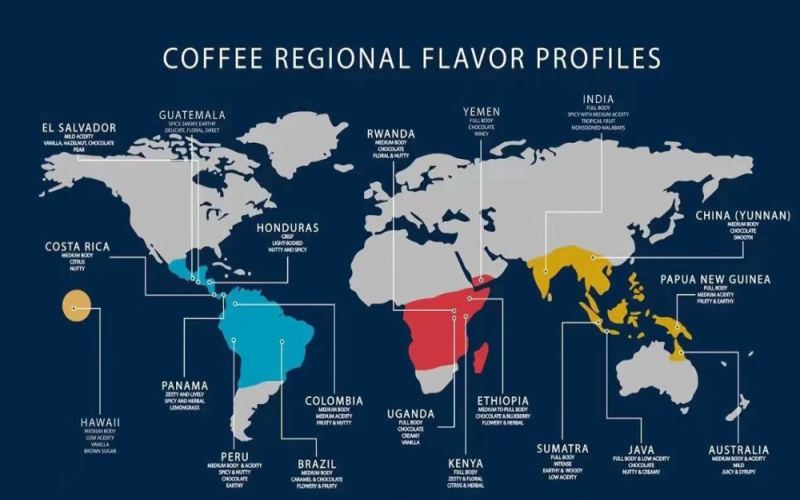
The Americas are one of the most important producing regions on the global coffee map, with Brazil, Colombia, Costa Rica, and Panama each possessing distinct terroir characteristics. This article will guide you through the distribution patterns of the coffee belt and the production landscape, while offering an in-depth analysis of the balanced flavors, processing methods, and representative producing regions of Central and South American coffee. From Brazil's pulped natural Cerrado to Panama's Hacienda La Esmeralda Geisha, from Colombia's washed Caturra from Huila to Costa Rica's Tarrazú with its citrusy acidity, the article also features a selection of specialty coffees from Front Street Coffee corresponding to these regions, helping coffee enthusiasts find their ideal choice based on flavor preferences. [more…]
Guatemala Antigua Specialty Coffee Beans: Analysis of the Rich Taste and Unique Flavor Cultivated by Volcanic Soil
Guatemala, as a world-renowned specialty coffee-producing country, enjoys exceptional natural conditions and diverse microclimates. Among its regions, Antigua stands out in particular, where volcanic soil, high altitude, and ample rainfall together create a coffee flavor with a perfect balance of acidity, sweetness, and body. The Guatemala Antigua coffee beans selected by Front Street Coffee are plump, with a captivating spicy aroma and a hint of mysterious smokiness that is unforgettable at first sip. This article will take you deep into the story of Antigua coffee's origin, its flavor characteristics, and the unique features of Guatemala's seven major coffee regions. [more…]
A Complete Guide to Brazilian Coffee Regions: Red Bourbon Flavor Characteristics and Brewing Parameters
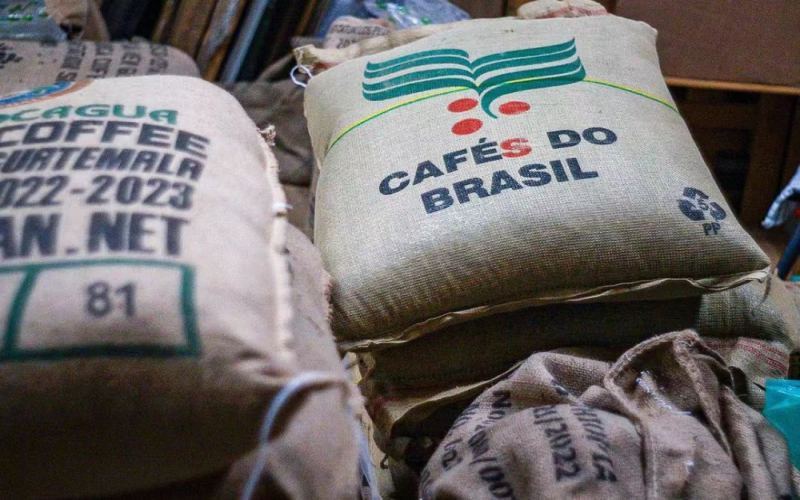
Brazil is the world's largest coffee producer, accounting for about one-third of global output. Despite frost and drought in 2020, its planted scale still ranks first. Brazil has numerous coffee-growing regions, and different terroirs give coffee beans vastly different flavor profiles. This article systematically reviews Brazil's main Arabica-producing regions, covering the growing characteristics and flavor trends of Bahia, Minas Gerais, Cerrado, São Paulo, Paraná, and other areas, and focuses on introducing the flavor characteristics, brewing parameters, and Brazil's official coffee grading system of Front Street Coffee Brazil Cerrado Red Bourbon coffee beans, helping coffee enthusiasts gain a deeper understanding of the origin and quality of the Brazilian coffee in their cup. [more…]
Panama Specialty Coffee Association and Producing Regions: From the BoP Competition to the Geisha Flavor of Kotowa Estate
Although Panama is a small country, it occupies a pivotal position in the world of specialty coffee. This article begins with an overview of Panama as a nation, then traces its coffee-growing history, the three well-known producing areas in Chiriquí Province, its main varieties and processing methods, and focuses on the Specialty Coffee Association of Panama (SCAP) and the Best of Panama (BoP) competition. It also details the family heritage of Hacienda La Catoiva, the flavor differences between the Duncan and Don Hé plots, and the cupping performance of the 2017 BoP auction lot of natural Geisha. Front Street Coffee recommends paying attention to the charm of Geisha from this producing region. [more…]
Colombia coffee | What does MAM refer to in Colombian coffee origins? What flavor and mouthfeel characteristics do Colombian specialty coffees have?
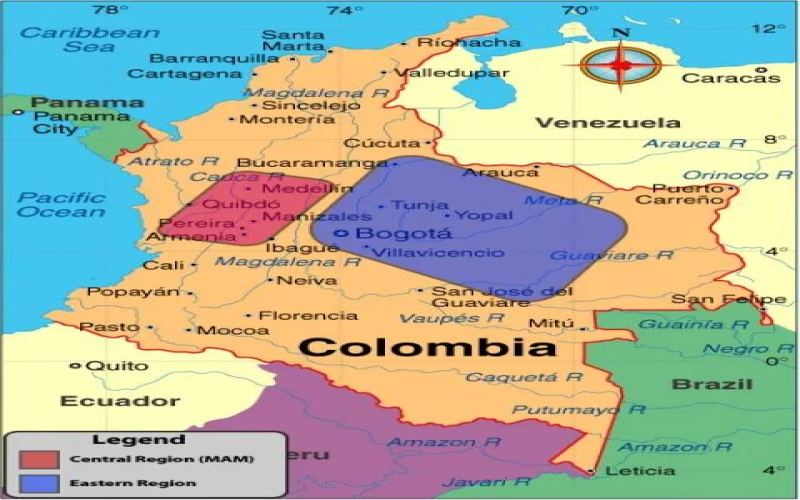
Colombia is the world's second-largest producer of Arabica coffee beans after Brazil. Everyone is familiar with the chocolatey flavor that characterizes Colombian coffee beans. We also all know that coffee originated in Ethiopia—so if no one had brought coffee seeds or coffee saplings to Colombia, how could this [more…]
Arabica Coffee Bean Buying Guide: Variety Characteristics, Reasons for Higher Prices, and Analysis of Representative Global Producing Regions
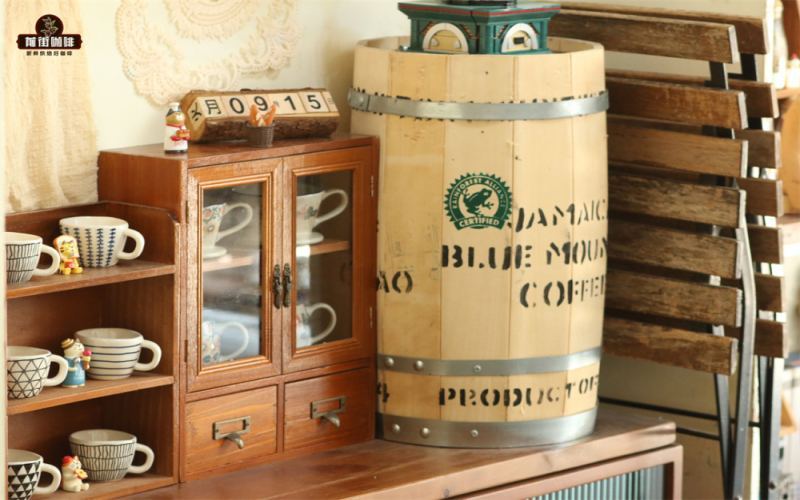
Why has Arabica coffee bean become synonymous with specialty coffee, and why is its price consistently higher than Robusta? Starting from plant taxonomy, this article systematically reviews Arabica's flavor advantages and cultivation limitations, and one by one explains the varietal characteristics, processing methods, and grading standards of representative producing regions around the world such as Brazil, Colombia, Panama, and Ethiopia. The article also combines Front Street Coffee's store selection and recommended bean list to provide coffee enthusiasts with a reference that is both informative and practical. [more…]
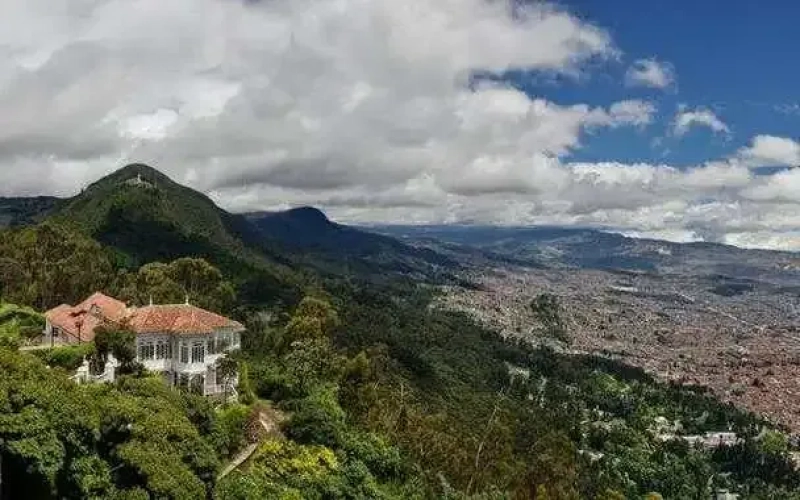
Colombia's Antioquia Coffee Region: From Historical Turbulence to the Rise of Specialty Chiroso
South America is an important coffee-producing region in the world. Colombia, with its three Cordillera mountain ranges and fertile volcanic soil, has become the world's third-largest coffee producer. Among its many producing regions, Antioquia stands out for both its output and quality. This article will begin with the ups and downs in Colombia's coffee history, trace the background of FNC's founding, and then focus on Antioquia's geographical advantages and La Palma estate, telling how the Echavarría family promoted the Chiroso variety and won 8th place with 89.39 points in Colombia's 2023 COE competition. Front Street Coffee will also combine the characteristics of the producing region to interpret for you its flavor potential and representative products. [more…]
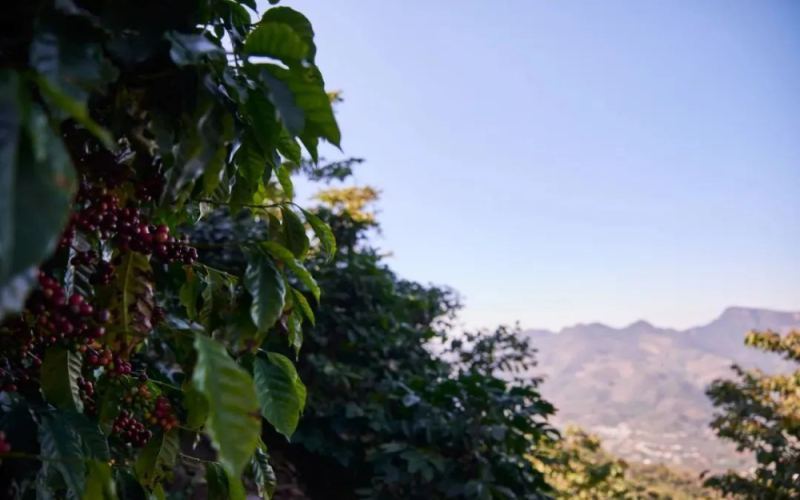
What makes Guatemalan coffee unique? A comprehensive analysis of the flavors and processing methods of eight major producing regions
Guatemala is home to over three hundred microclimates, where volcanic soil and high-altitude terrain nurture specialty coffee with distinctive flavors. From the balanced fruit acidity of Antigua to the bright fruity aromas of Huehuetenango, the eight major regions each have their own character. This article will guide you through Guatemala's coffee-growing regions, varietal characteristics, grading methods, and washed processing procedures, while also analyzing its signature flavor profile. Front Street Coffee has a particular affection for this land; the Flora coffee beans on its menu come from the Antigua region, washed processed, with a delicate flavor, and are well worth trying. [more…]
Arabica Coffee Bean Buying Guide: Major Origin Brand Recommendations and the Deep Reasons Why Prices Are Higher Than Robusta
Why are Arabica coffee beans generally more expensive than Robusta? Which Arabica origins around the world are worth paying attention to? Starting from plant taxonomy, this article systematically sorts out Arabica's flavor advantages and cultivation shortcomings, and introduces one by one the variety characteristics, processing methods, and grading standards of core producing regions such as Brazil, Colombia, Panama, Guatemala, Costa Rica, Jamaica, Ethiopia, Kenya, and Indonesia. At the same time, drawing on the store selection experience of Front Street Coffee, it provides coffee lovers with a complete cognitive framework from producing region to cup, helping you find the one that suits your taste among a dazzling array of bean lists. [more…]
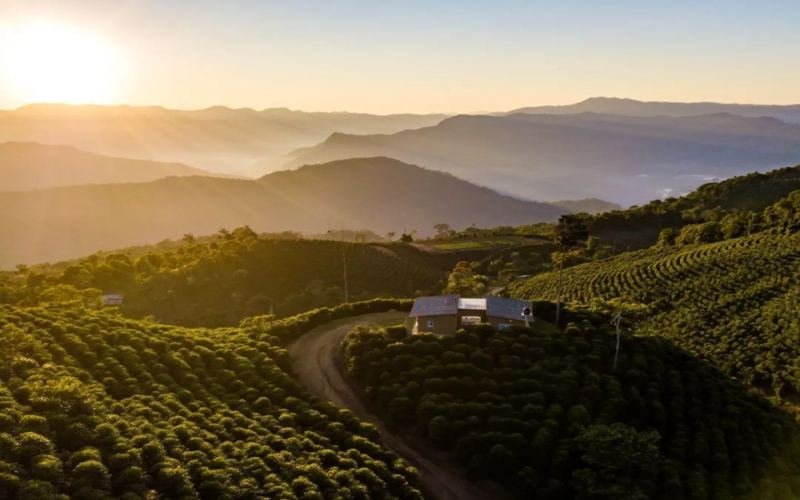
Planting Background, Development Trajectory, and Java Variety Flavor Analysis of Bolivian Coffee Regions
Although Bolivia is hailed as an ideal place for growing coffee, its production has always been limited. The high altitude and diverse terrain give the coffee rich sweetness and soft acidity. It was with Bolivian Geisha that Miki Suzuki, runner-up in the 2017 WBC, won attention. However, steep roads, the temptation of coca cultivation, and the blow of leaf rust in 2013 have repeatedly brought twists and turns to the coffee industry of this landlocked South American country. From the glory of the COE competition to the export difficulties amid political turmoil, the revival of Bolivian specialty coffee cannot be separated from the perseverance of the Rodriguez family. They promote the Tomorrow's Sun project and have cultivated distinctive bean varieties such as Coco Natural Java. This article will introduce Bolivia's coffee-producing regions, historical context, and variety flavors, and Front Street Coffee also shares its cupping experience. [more…]
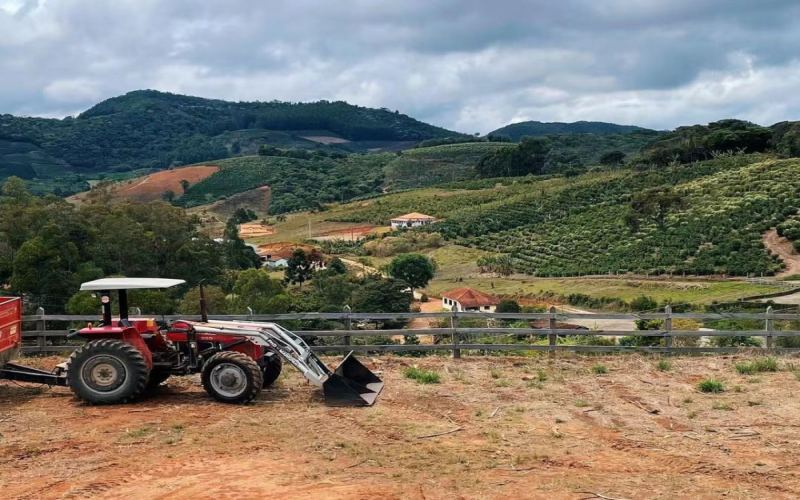
A Detailed Guide to Brazilian Coffee Bean Flavor Characteristics and Pour-Over Techniques: Is Light Roast or Dark Roast More Suitable?
Brazil is the world's largest producer of Arabica coffee beans, and its production fluctuations directly affect international futures prices. In recent years, adverse weather, economic factors, and the impact of the pandemic have left Brazilian coffee in a state of supply falling short of demand. Brazil's coffee-growing elevations are generally low, the beans are relatively soft, and the flavor is dominated by nutty and chocolatey sweetness, balanced acidity and bitterness, and a full-bodied mouthfeel. This article provides a detailed introduction to Brazil's coffee-producing regions, main varieties, and flavor characteristics, as well as two Brazilian beans recommended by Front Street Coffee and pour-over brewing parameters, helping coffee enthusiasts gain a comprehensive understanding of Brazilian coffee and master the key brewing points. [more…]
A Comprehensive Analysis of Kenya's Gatomboya Factory: A Flavor Benchmark of the Nyeri Region and the Specialty Coffee Grading System
Gatomboy Processing Factory is a name that cannot be ignored in the landscape of Kenyan specialty coffee. It belongs to the Barichu Cooperative in the Nyeri region and once scored an impressive 96 points in a 2016 Coffee Review cupping, ranking among Kenya's seven world-class green bean processing factories. Kenya's ability to become a model of global high-quality coffee production is closely tied to its government-led unified purchasing, cupping grading, and public auction system. This system benefits more than 570,000 smallholder farmers and has also created Kenya coffee's irreplaceable flavor charm. This article will guide you through an in-depth understanding of Gatomboy Processing Factory's background, Kenya's coffee-producing regions, green bean grading standards, cultivation history, and variety composition, and recommend related products from Front Street Coffee, presenting coffee lovers with a complete knowledge map of Kenyan coffee. [more…]
What grade does Arabica coffee belong to? A comprehensive analysis of major global origins and representative brands
Coffee belongs to the Rubiaceae family, with about eighty known species, of which three main categories are used for drinking: Arabica, Robusta, and Liberica. Arabica, with its balanced flavor and aroma, has become the mainstay of single-origin and specialty coffee, accounting for more than seventy percent of global production. From the nutty-chocolate notes of Brazil, to the citrus and dark cocoa of Colombia, and on to Panama Geisha, Jamaica Blue Mountain, and Ethiopia Yirgacheffe, each origin has its own distinctive flavor. Front Street Coffee stores carry coffee beans from more than fifty origins, and this article examines Arabica's grade positioning and the flavors of well-known origins around the world one by one. [more…]